Apollo — Brand Design
Apollo — Brand Design
Apollo — Brand Design
Balancing consistency and flexibility across product, campaigns, and lifecycle
Balancing consistency and flexibility across product, campaigns, and lifecycle
Balancing consistency and flexibility across product, campaigns, and lifecycle
For two years I worked across brand and campaign design at Apollo, an AI-powered sales platform used by millions of teams. My focus was how the product showed up across marketing, onboarding, lifecycle, and web, collaborating closely with marketing, product, and engineering throughout.
For two years I worked across brand and campaign design at Apollo, an AI-powered sales platform used by millions of teams. My focus was how the product showed up across marketing, onboarding, lifecycle, and web, collaborating closely with marketing, product, and engineering throughout.
For two years I worked across brand and campaign design at Apollo, an AI-powered sales platform used by millions of teams. My focus was how the product showed up across marketing, onboarding, lifecycle, and web, collaborating closely with marketing, product, and engineering throughout.
The company
The company
The company
Apollo helps sales teams find leads, automate outreach, and manage pipeline data. It's a fast-moving product-led environment where marketing and product are tightly coupled, and things change often.
Apollo helps sales teams find leads, automate outreach, and manage pipeline data. It's a fast-moving product-led environment where marketing and product are tightly coupled, and things change often.
Apollo helps sales teams find leads, automate outreach, and manage pipeline data. It's a fast-moving product-led environment where marketing and product are tightly coupled, and things change often.
My role
My role
My role
I worked across brand and campaign design at Apollo, collaborating with marketing, product, and engineering on campaigns, landing pages, onboarding, lifecycle, and the broader brand system. Over time this also included AI-assisted workflows for faster iteration across campaign variations and social outputs.
Over two years, I designed AI-powered, end to end experiences spanning onboarding, high traffic web surfaces, product storytelling, email, and paid social, crafting cohesive journeys from first impression through activation. I partnered cross functionally with marketing, product, and engineering to rapidly prototype, test, and scale new growth ideas.
I also expanded the web and email design systems to support faster experimentation and built AI driven tools that enabled marketing teams to generate high quality creative at scale.
I worked across brand and campaign design at Apollo, collaborating with marketing, product, and engineering on campaigns, landing pages, onboarding, lifecycle, and the broader brand system. Over time this also included AI-assisted workflows for faster iteration across campaign variations and social outputs.
The challenge
The challenge
The challenge
The starting point wasn't clean. Different teams were moving fast and solving similar problems independently, so the output had started to drift. Depending on where you landed it felt like a slightly different product. My job was bringing coherence back without becoming a bottleneck, keeping the work expressive while building enough shared structure to reduce the fragmentation.
The starting point wasn't clean. Different teams were moving fast and solving similar problems independently, so the output had started to drift. Depending on where you landed it felt like a slightly different product. My job was bringing coherence back without becoming a bottleneck, keeping the work expressive while building enough shared structure to reduce the fragmentation.
The starting point wasn't clean. Different teams were moving fast and solving similar problems independently, so the output had started to drift. Depending on where you landed it felt like a slightly different product. My job was bringing coherence back without becoming a bottleneck, keeping the work expressive while building enough shared structure to reduce the fragmentation.
Contributors
Contributors
Contributors
Aaron Stump, Creative Director
Anton Aheichanka, Lead Designer
Brendan Walker, Lifecycle Manager
Johan Vilchez, Art Director
Manuela Moncayo, Sr. Product Designer
Min Kang, Web Designer
Raouia Boularbah, AI Expert
Spencer Ferris, Sr. Software Engineer
Aaron Stump, Creative Director
Anton Aheichanka, Lead Designer
Brendan Walker, Lifecycle Manager
Johan Vilchez, Art Director
Manuela Moncayo, Sr. Product Designer
Min Kang, Web Designer
Raouia Boularbah, AI Expert
Spencer Ferris, Sr. Software Engineer
Aaron Stump, Creative Director
Anton Aheichanka, Lead Designer
Brendan Walker, Lifecycle Manager
Johan Vilchez, Art Director
Manuela Moncayo, Sr. Product Designer
Min Kang, Web Designer
Raouia Boularbah, AI Expert
Spencer Ferris, Sr. Software Engineer
My responsibilities
My responsibilities
My responsibilities
Art Direction
Art Direction
Art Direction
Campaign Design
Campaign Design
Campaign Design
Brand Design
Brand Design
Brand Design
Web Design
Web Design
Web Design
Motion Design
Motion Design
Motion Design
Illustration Systems
Illustration Systems
Illustration Systems
Lifecycle & Email
Lifecycle & Email
Lifecycle & Email
Storytelling Design
Storytelling Design
Storytelling Design
AI-Assisted Workflows
AI-Assisted Workflows
AI-Assisted Workflows
Design Systems
Design Systems
Design Systems
Cross-functional Collaboration
Cross-functional Collaboration
Cross-functional Collaboration
Evolving the Brand
Evolving the Brand
Evolving the Brand
Finding a visual language that could scale without becoming predictable
Finding a visual language that could scale without becoming predictable
Finding a visual language that could scale without becoming predictable
When I joined the brand was technically present but starting to feel uneven. Different teams shipping quickly, solving similar problems in different ways, so depending on where you landed it felt like a slightly different product.
My contribution was working through the visual language across different surfaces and projects. Layouts, social ads, campaign experiments, pushing the brand toward something more expressive and cohesive. The system evolved progressively through the work rather than from a single top-down decision. Some directions stuck, some didn't. That's how the brand found its shape.
When I joined the brand was technically present but starting to feel uneven. Different teams shipping quickly, solving similar problems in different ways, so depending on where you landed it felt like a slightly different product.
My contribution was working through the visual language across different surfaces and projects. Layouts, social ads, campaign experiments, pushing the brand toward something more expressive and cohesive. The system evolved progressively through the work rather than from a single top-down decision. Some directions stuck, some didn't. That's how the brand found its shape.
When I joined the brand was technically present but starting to feel uneven. Different teams shipping quickly, solving similar problems in different ways, so depending on where you landed it felt like a slightly different product.
My contribution was working through the visual language across different surfaces and projects. Layouts, social ads, campaign experiments, pushing the brand toward something more expressive and cohesive. The system evolved progressively through the work rather than from a single top-down decision. Some directions stuck, some didn't. That's how the brand found its shape.


One idea we kept coming back to was a beam-based structure, a visual framework that kept things connected across surfaces while still allowing variation. It became a quiet thread through a lot of the work.
A lot of the refinement happened in typography, motion pacing, and composition details. The small things that made the system feel more intentional and less template-driven across different surfaces.
One idea we kept coming back to was a beam-based structure, a visual framework that kept things connected across surfaces while still allowing variation. It became a quiet thread through a lot of the work.
A lot of the refinement happened in typography, motion pacing, and composition details. The small things that made the system feel more intentional and less template-driven across different surfaces.
One idea we kept coming back to was a beam-based structure, a visual framework that kept things connected across surfaces while still allowing variation. It became a quiet thread through a lot of the work.
A lot of the refinement happened in typography, motion pacing, and composition details. The small things that made the system feel more intentional and less template-driven across different surfaces.
Motion played an important part too. It helped add pacing and focus to otherwise static layouts, especially across onboarding and campaign surfaces.
The tension I kept thinking about was consistency versus expressiveness. Technically consistent work that feels forgettable is still a failure. The question was always how do we stay coherent without everything looking the same.
Motion played an important part too. It helped add pacing and focus to otherwise static layouts, especially across onboarding and campaign surfaces.
The tension I kept thinking about was consistency versus expressiveness. Technically consistent work that feels forgettable is still a failure. The question was always how do we stay coherent without everything looking the same.
Motion played an important part too. It helped add pacing and focus to otherwise static layouts, especially across onboarding and campaign surfaces.
The tension I kept thinking about was consistency versus expressiveness. Technically consistent work that feels forgettable is still a failure. The question was always how do we stay coherent without everything looking the same.

Data Landing Page
Data Landing Page
Data Landing Page
Translating product depth into a clear story
Translating product depth into a clear story
Translating product depth into a clear story
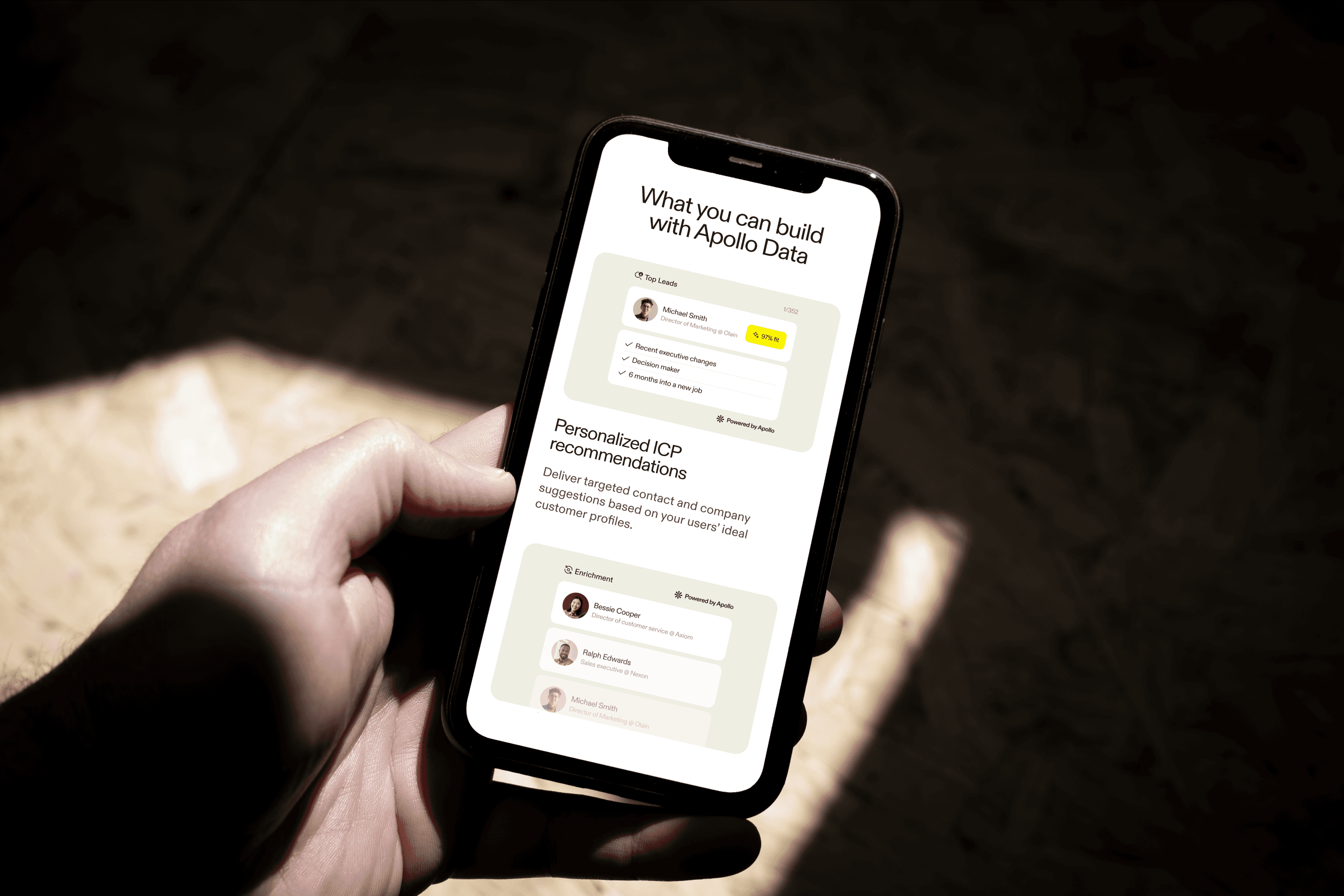
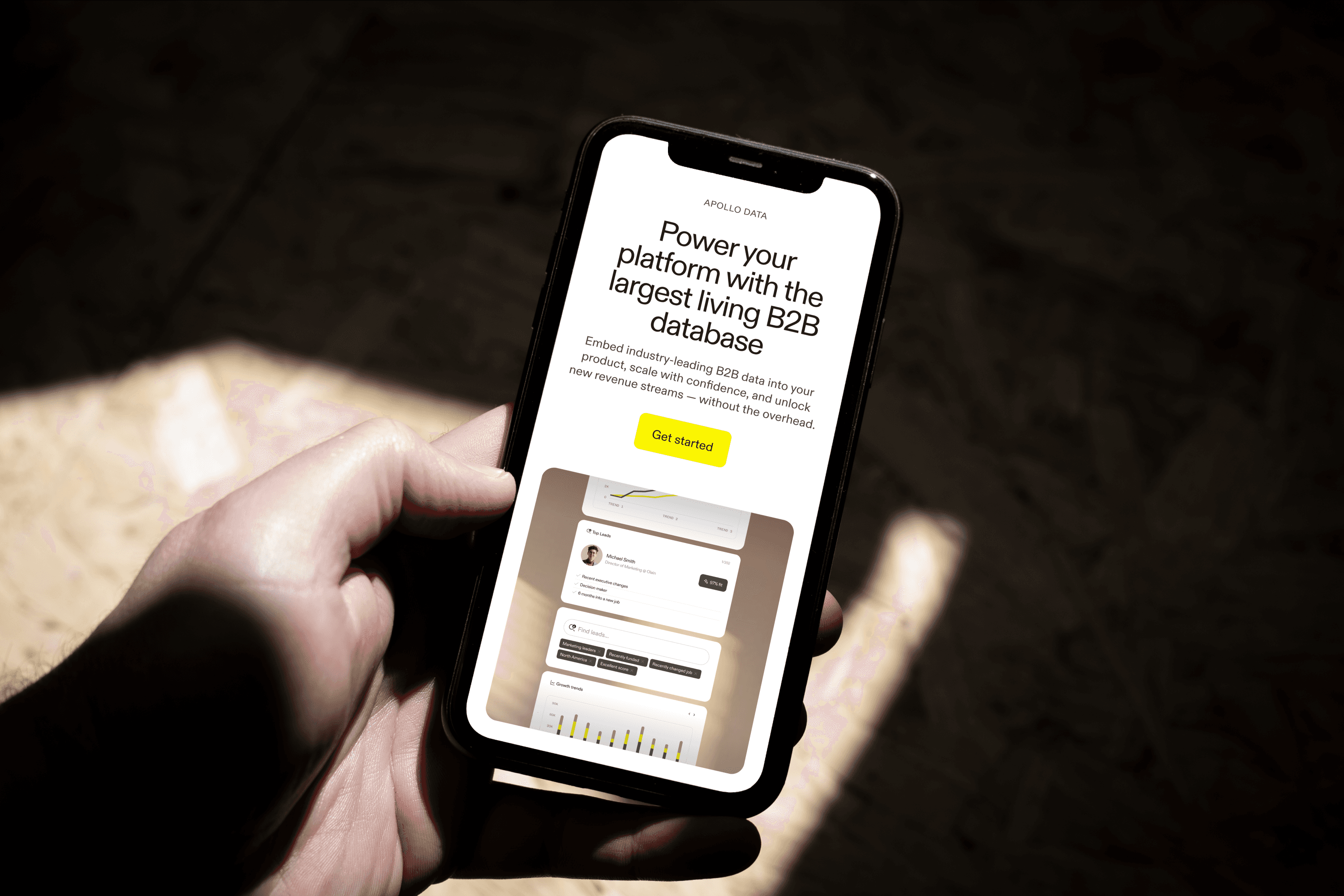
Apollo had real depth in its data but the landing page didn't reflect that. It was feature heavy and hard to follow. My job was finding the narrative underneath the features and building a page that communicated the value quickly without dumbing it down.
The audience is sophisticated. They don't want to be oversold. So the work was as much about restraint and hierarchy as visual craft.
Apollo had real depth in its data but the landing page didn't reflect that. It was feature heavy and hard to follow. My job was finding the narrative underneath the features and building a page that communicated the value quickly without dumbing it down.
The audience is sophisticated. They don't want to be oversold. So the work was as much about restraint and hierarchy as visual craft.
Apollo had real depth in its data but the landing page didn't reflect that. It was feature heavy and hard to follow. My job was finding the narrative underneath the features and building a page that communicated the value quickly without dumbing it down.
The audience is sophisticated. They don't want to be oversold. So the work was as much about restraint and hierarchy as visual craft.

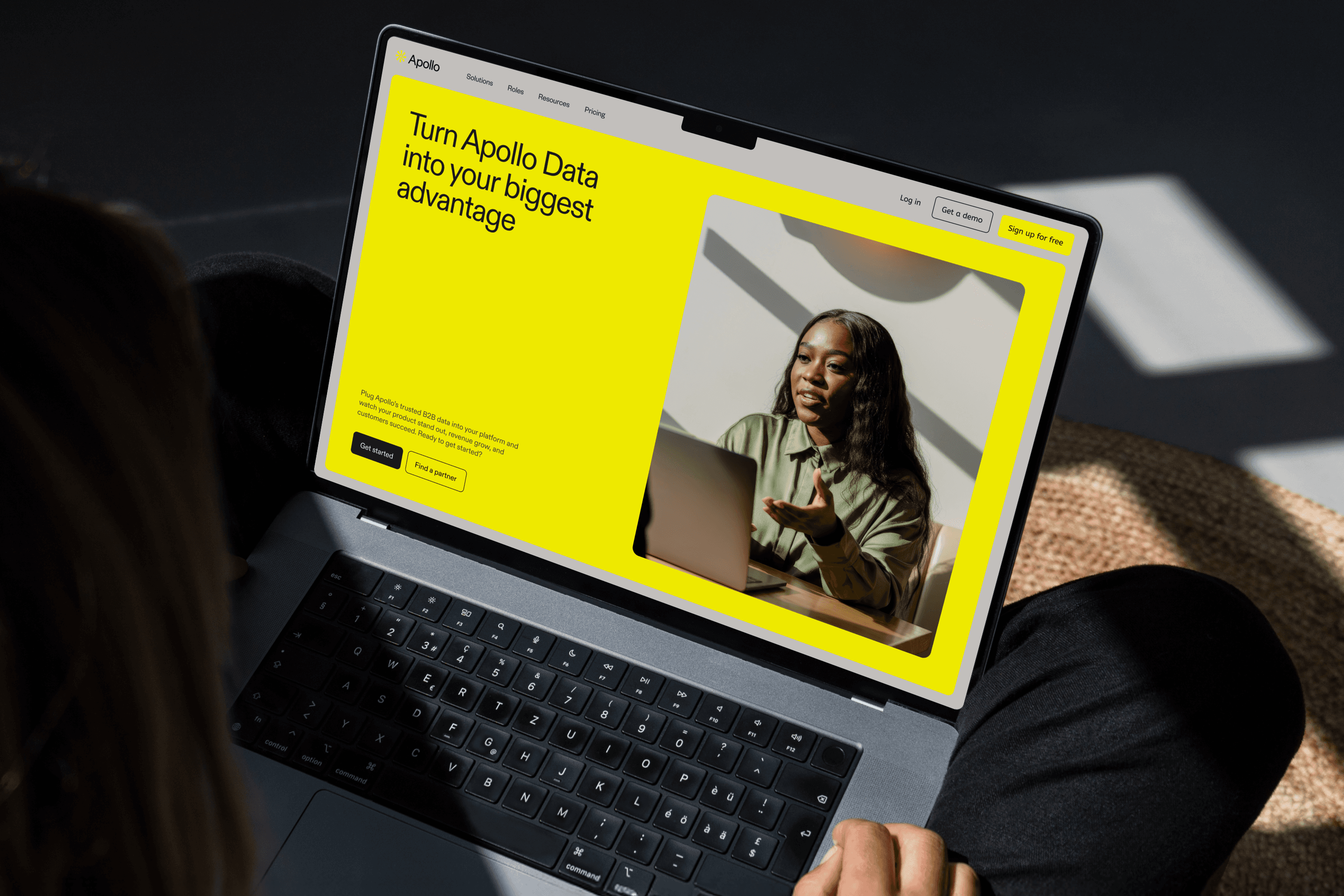
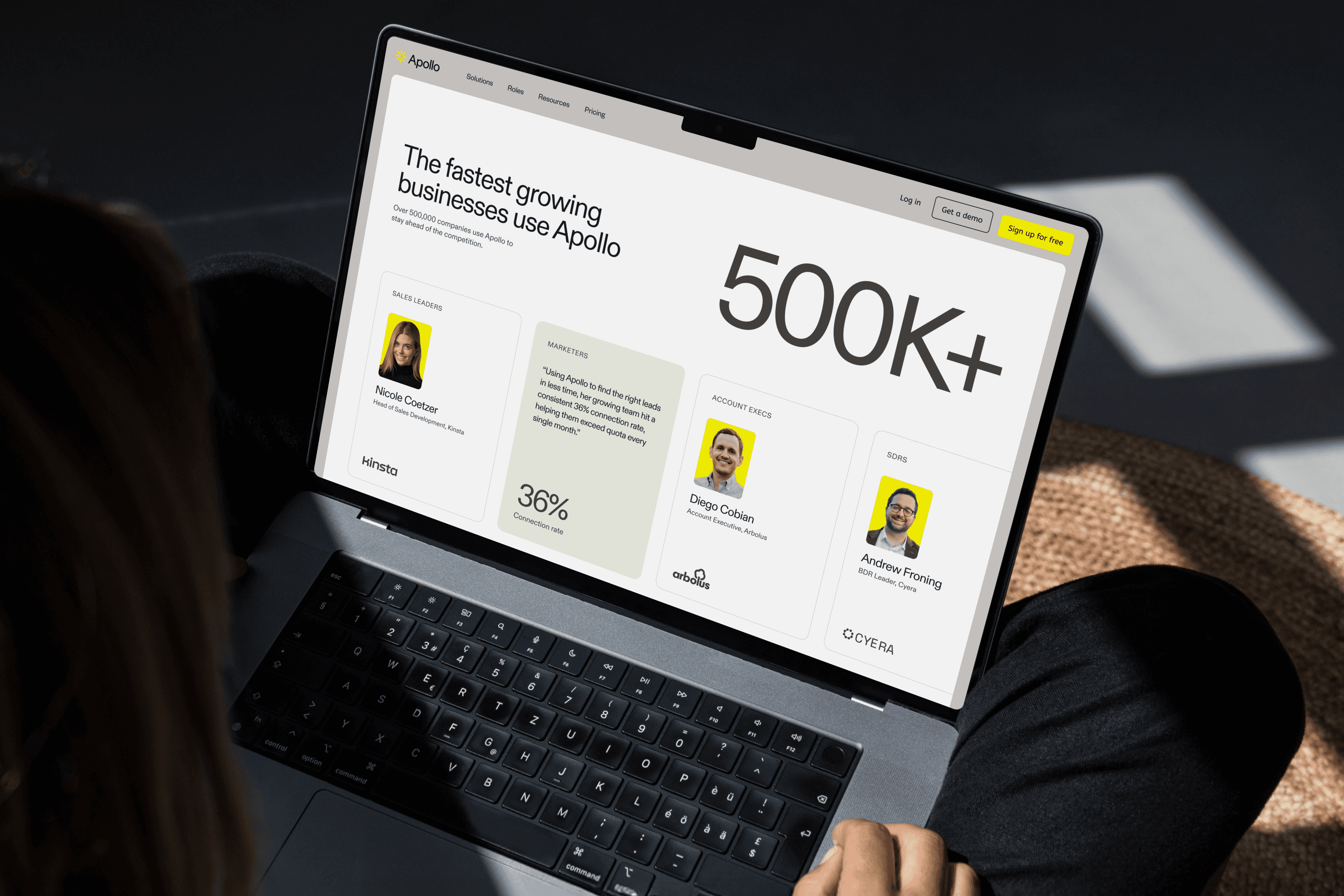
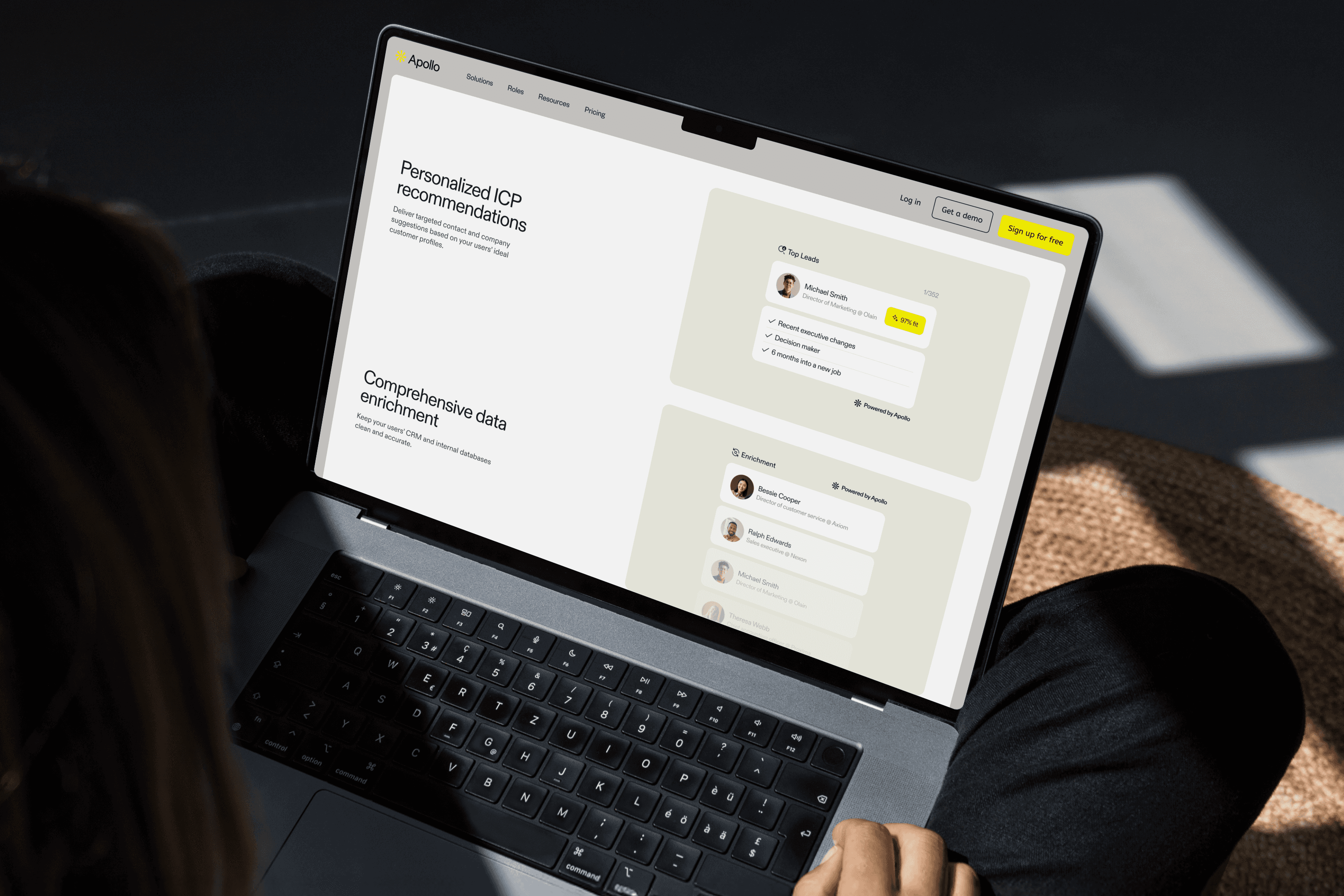
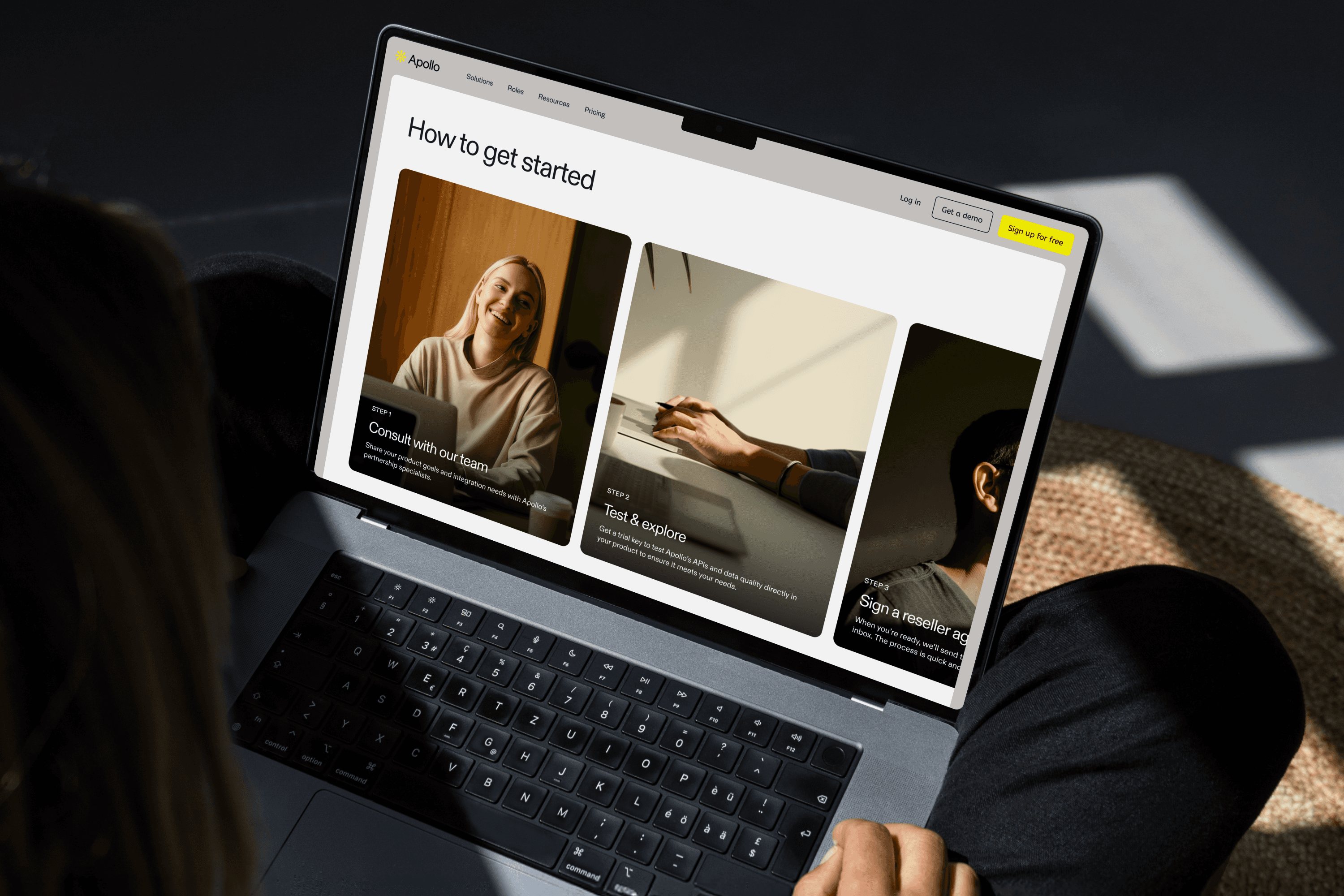
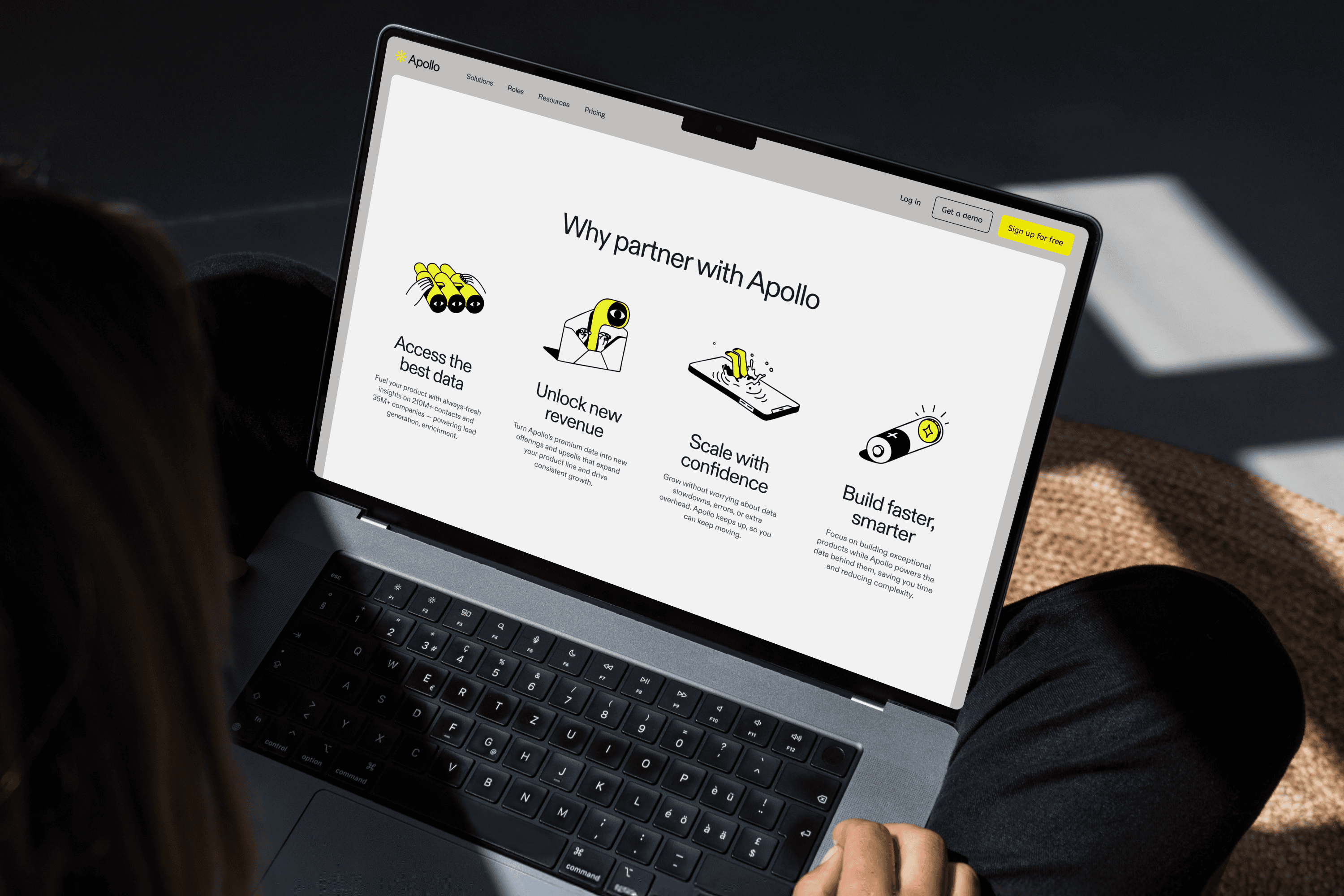
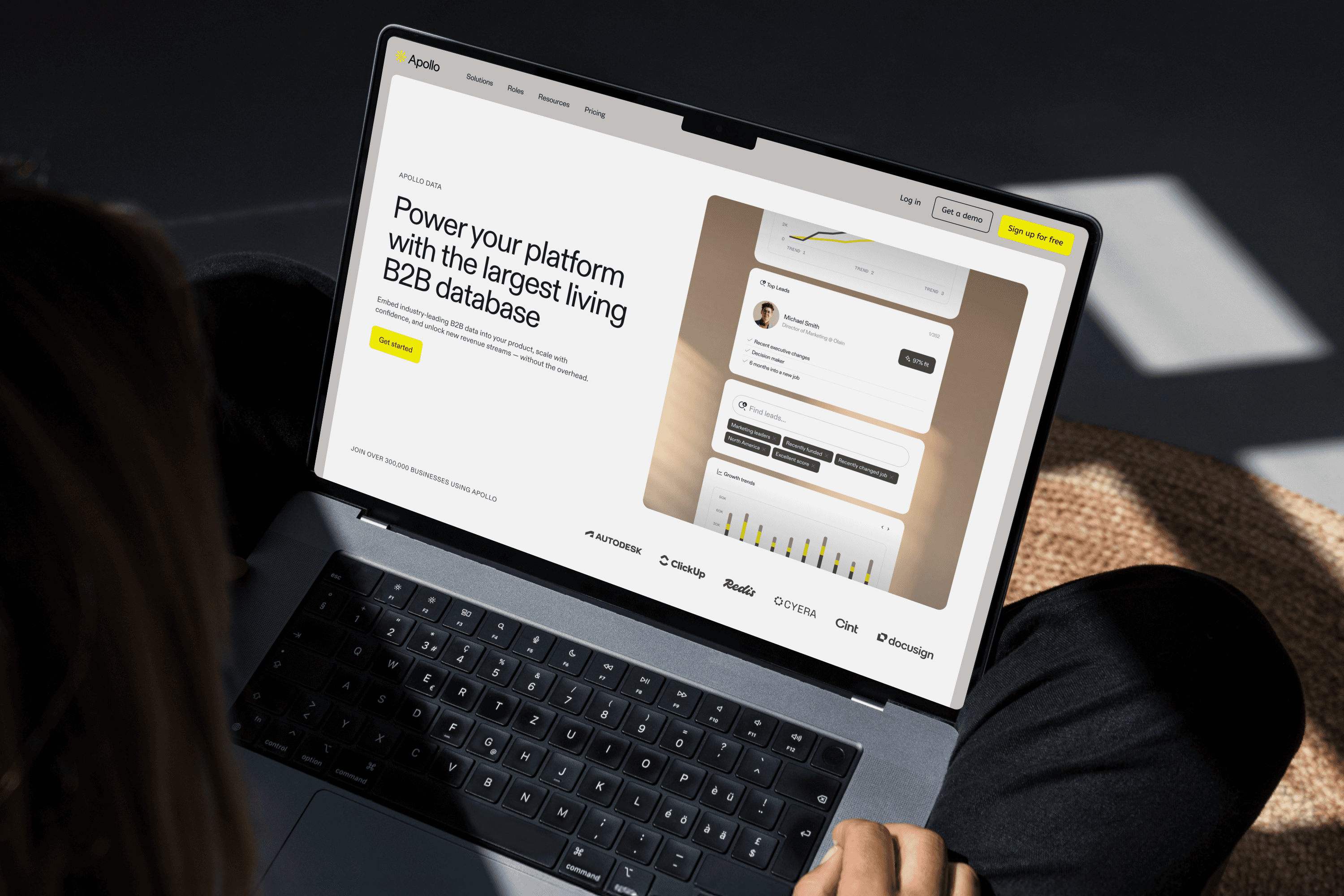
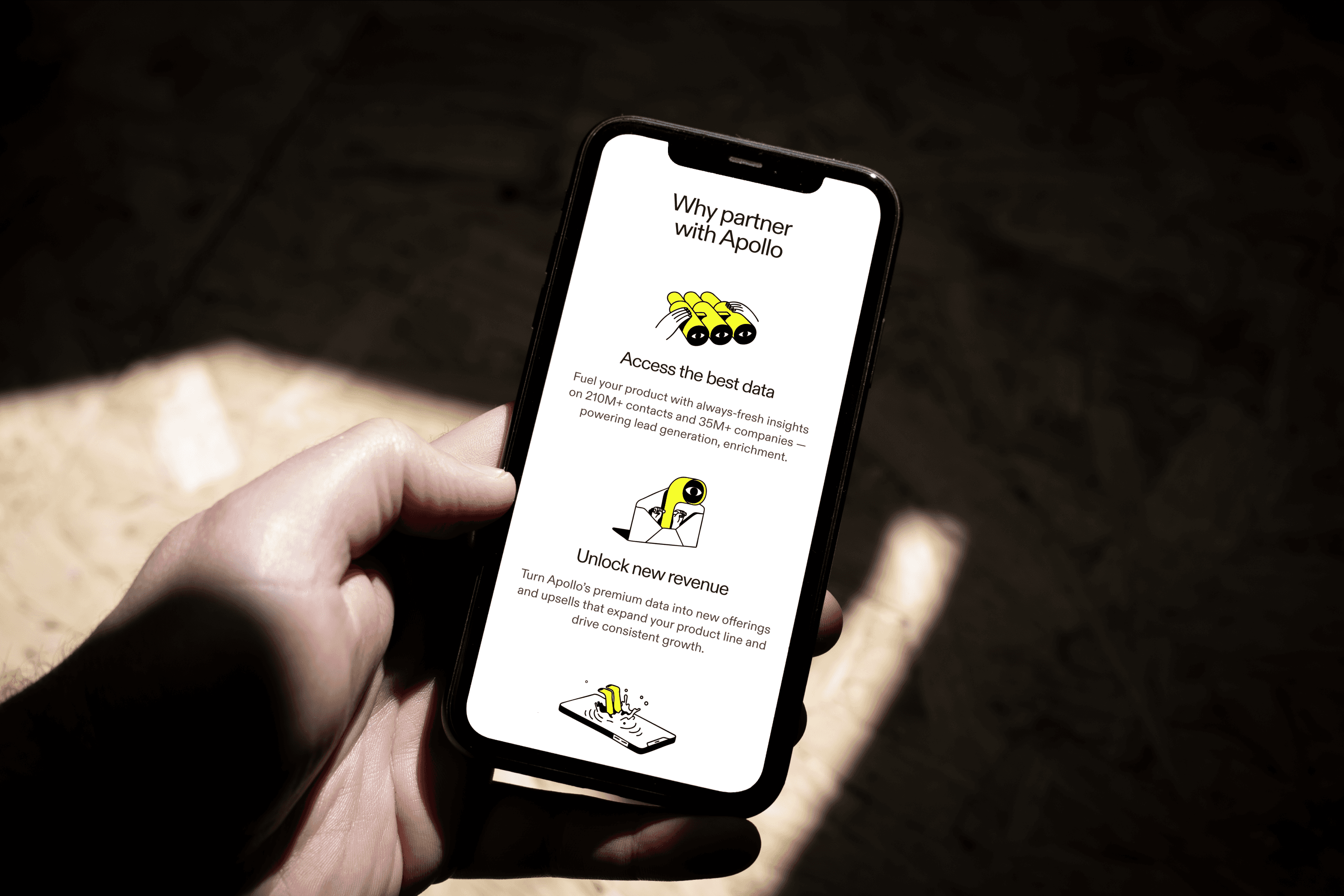
The final direction focused more on clarity and hierarchy than segmentation logic. We also brought in generated visuals and illustration systems to keep it aligned with the broader brand, though this was more about consistency than innovation.
We initially explored a more adaptive layout system based on audience type, but it was dropped late because it introduced too much implementation complexity for engineering at the time.
The final direction focused more on clarity and hierarchy than segmentation logic. We also brought in generated visuals and illustration systems to keep it aligned with the broader brand, though this was more about consistency than innovation.
We initially explored a more adaptive layout system based on audience type, but it was dropped late because it introduced too much implementation complexity for engineering at the time.
The final direction focused more on clarity and hierarchy than segmentation logic. We also brought in generated visuals and illustration systems to keep it aligned with the broader brand, though this was more about consistency than innovation.
We initially explored a more adaptive layout system based on audience type, but it was dropped late because it introduced too much implementation complexity for engineering at the time.

Product Storytelling
Product Storytelling
Product Storytelling
Making complex products easier to follow
Making complex products easier to follow
Making complex products easier to follow
Working across marketing and product I focused on simplifying how stories were structured across campaigns, onboarding, and product surfaces. That meant thinking carefully about pacing, hierarchy, motion, and progressive disclosure.
The goal was to build narrative directly into the structure of the experience rather than layering storytelling on top of an existing interface. Over time the work shifted from feature-heavy communication toward something more focused and easier to follow.
Working across marketing and product I focused on simplifying how stories were structured across campaigns, onboarding, and product surfaces. That meant thinking carefully about pacing, hierarchy, motion, and progressive disclosure.
The goal was to build narrative directly into the structure of the experience rather than layering storytelling on top of an existing interface. Over time the work shifted from feature-heavy communication toward something more focused and easier to follow.
Working across marketing and product I focused on simplifying how stories were structured across campaigns, onboarding, and product surfaces. That meant thinking carefully about pacing, hierarchy, motion, and progressive disclosure.
The goal was to build narrative directly into the structure of the experience rather than layering storytelling on top of an existing interface. Over time the work shifted from feature-heavy communication toward something more focused and easier to follow.

Experimentation & Testing
Experimentation & Testing
Experimentation & Testing
Designing at the speed of growth
Designing at the speed of growth
Designing at the speed of growth
We ran a lot of experiments across campaigns, mostly around messaging, layout, and visual hierarchy. Some patterns were clear. Early value communication tended to perform better. Simpler layouts with a clear focal point and strong hierarchy tended to perform better. Though for hero sections specifically we found that scaling back the visual and moving social proof higher up the page made a meaningful difference, giving people a reason to trust before they'd read anything else.
Photography-based AI visuals worked well in some contexts but not consistently enough to become a rule. One experiment that tested well in paid ads didn't translate to landing pages at all, so we kept it channel-specific rather than rolling it out broadly. Results were always a bit messy to attribute cleanly because multiple experiments were running at the same time. In some cases we only realized post-launch that two experiments were overlapping and affecting the same metric.
We ran a lot of experiments across campaigns, mostly around messaging, layout, and visual hierarchy. Some patterns were clear. Early value communication tended to perform better. Simpler layouts with a clear focal point and strong hierarchy tended to perform better. Though for hero sections specifically we found that scaling back the visual and moving social proof higher up the page made a meaningful difference, giving people a reason to trust before they'd read anything else.
Photography-based AI visuals worked well in some contexts but not consistently enough to become a rule. One experiment that tested well in paid ads didn't translate to landing pages at all, so we kept it channel-specific rather than rolling it out broadly. Results were always a bit messy to attribute cleanly because multiple experiments were running at the same time. In some cases we only realized post-launch that two experiments were overlapping and affecting the same metric.
We ran a lot of experiments across campaigns, mostly around messaging, layout, and visual hierarchy. Some patterns were clear. Early value communication tended to perform better. Simpler layouts with a clear focal point and strong hierarchy tended to perform better. Though for hero sections specifically we found that scaling back the visual and moving social proof higher up the page made a meaningful difference, giving people a reason to trust before they'd read anything else.
Photography-based AI visuals worked well in some contexts but not consistently enough to become a rule. One experiment that tested well in paid ads didn't translate to landing pages at all, so we kept it channel-specific rather than rolling it out broadly. Results were always a bit messy to attribute cleanly because multiple experiments were running at the same time. In some cases we only realized post-launch that two experiments were overlapping and affecting the same metric.

Design Systems
Design Systems
Design Systems
Balancing structure with flexibility
Balancing structure with flexibility
Balancing structure with flexibility
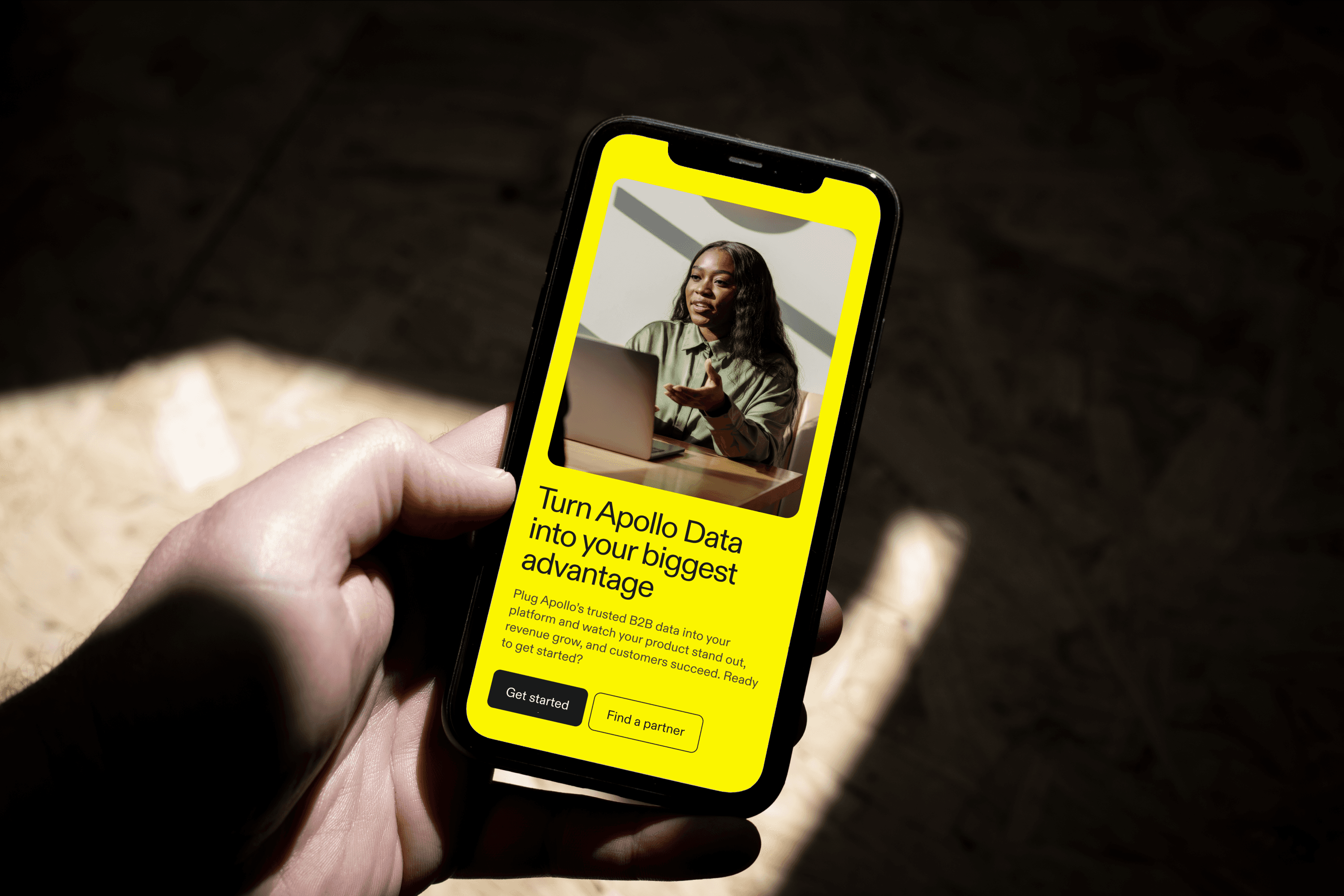
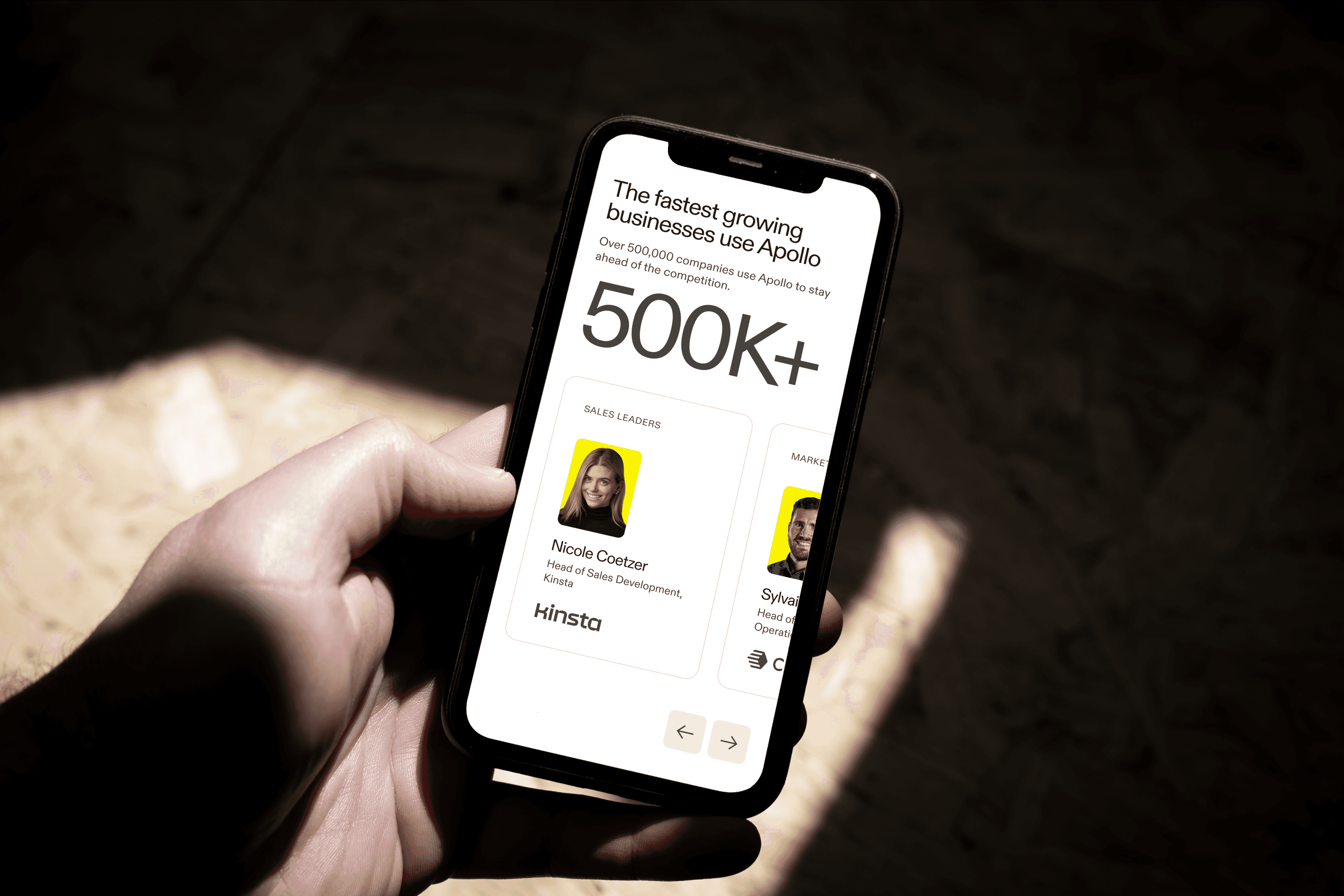
As the number of campaigns increased we originally leaned heavily into modular components to keep things consistent and scalable. Over time that created an unintended problem. Because everything was built from the same set of modules, a lot of output started to look and feel the same. Layouts became predictable and even when the content changed the visual rhythm flattened out.
As the number of campaigns increased we originally leaned heavily into modular components to keep things consistent and scalable. Over time that created an unintended problem. Because everything was built from the same set of modules, a lot of output started to look and feel the same. Layouts became predictable and even when the content changed the visual rhythm flattened out.
As the number of campaigns increased we originally leaned heavily into modular components to keep things consistent and scalable. Over time that created an unintended problem. Because everything was built from the same set of modules, a lot of output started to look and feel the same. Layouts became predictable and even when the content changed the visual rhythm flattened out.

The challenge shifted from creating consistency to reintroducing flexibility without losing coherence. We moved toward creative guardrails instead of rigid templates. Shared rules around typography, spacing, motion, and layout behavior so teams could make decisions independently without the work drifting visually.
I partnered with engineering to use AI to automate repetitive parts of system building, from token generation to component documentation, freeing up time for the decisions that actually required judgment.
The challenge shifted from creating consistency to reintroducing flexibility without losing coherence. We moved toward creative guardrails instead of rigid templates. Shared rules around typography, spacing, motion, and layout behavior so teams could make decisions independently without the work drifting visually.
I partnered with engineering to use AI to automate repetitive parts of system building, from token generation to component documentation, freeing up time for the decisions that actually required judgment.
The challenge shifted from creating consistency to reintroducing flexibility without losing coherence. We moved toward creative guardrails instead of rigid templates. Shared rules around typography, spacing, motion, and layout behavior so teams could make decisions independently without the work drifting visually.
I partnered with engineering to use AI to automate repetitive parts of system building, from token generation to component documentation, freeing up time for the decisions that actually required judgment.

Lifecycle Emails
Lifecycle Emails
Lifecycle Emails
Building a connected system from a fragmented starting point
Building a connected system from a fragmented starting point
Building a connected system from a fragmented starting point
This was the work I owned most completely. The existing email flow was fragmented. Templates that didn't connect, a visual language that felt disconnected from the rest of the brand. The lifecycle team handled content strategy and logistics. My job was the design.
This was the work I owned most completely. The existing email flow was fragmented. Templates that didn't connect, a visual language that felt disconnected from the rest of the brand. The lifecycle team handled content strategy and logistics. My job was the design.
This was the work I owned most completely. The existing email flow was fragmented. Templates that didn't connect, a visual language that felt disconnected from the rest of the brand. The lifecycle team handled content strategy and logistics. My job was the design.

I rebuilt the template system from scratch and created a new email design language that felt like a natural extension of the brand. As part of that I developed an AI-generated illustration library, visual assets that could flex across different email types while staying consistent.
The goal was a system the lifecycle team could actually use and extend independently. Modular enough to move fast, coherent enough to stay on brand.
I rebuilt the template system from scratch and created a new email design language that felt like a natural extension of the brand. As part of that I developed an AI-generated illustration library, visual assets that could flex across different email types while staying consistent.
The goal was a system the lifecycle team could actually use and extend independently. Modular enough to move fast, coherent enough to stay on brand.
I rebuilt the template system from scratch and created a new email design language that felt like a natural extension of the brand. As part of that I developed an AI-generated illustration library, visual assets that could flex across different email types while staying consistent.
The goal was a system the lifecycle team could actually use and extend independently. Modular enough to move fast, coherent enough to stay on brand.


Onboarding Experience
Onboarding Experience
Onboarding Experience
Making the brand felt, not just seen
Making the brand felt, not just seen
Making the brand felt, not just seen
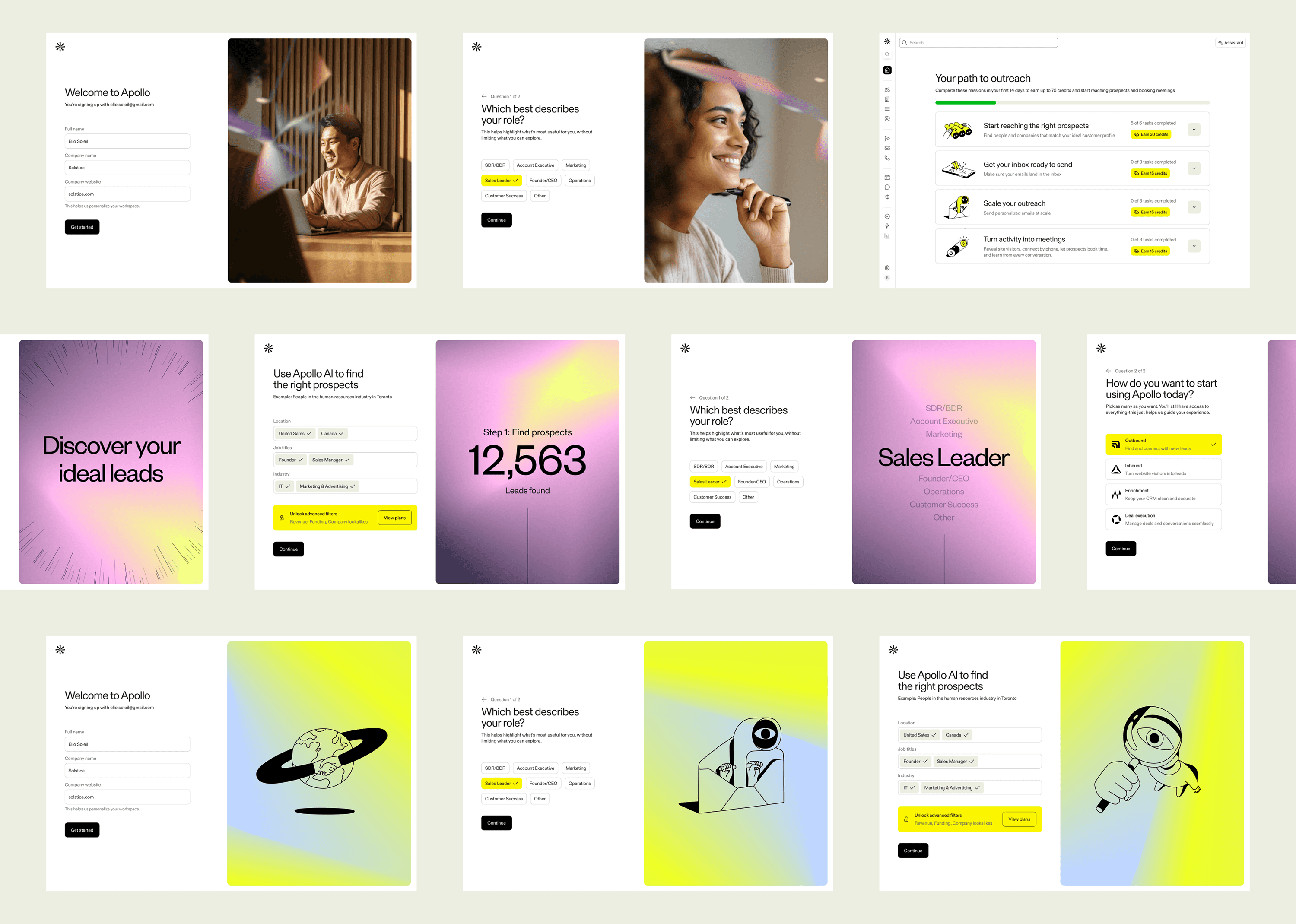
My instinct for onboarding was to make the brand felt, not just seen. I wanted a dynamic animated visual on the right side of the screen that responded to what the user was selecting on the left. Something that made the experience feel alive and brought the brand into the product moment.
My instinct for onboarding was to make the brand felt, not just seen. I wanted a dynamic animated visual on the right side of the screen that responded to what the user was selecting on the left. Something that made the experience feel alive and brought the brand into the product moment.
My instinct for onboarding was to make the brand felt, not just seen. I wanted a dynamic animated visual on the right side of the screen that responded to what the user was selecting on the left. Something that made the experience feel alive and brought the brand into the product moment.

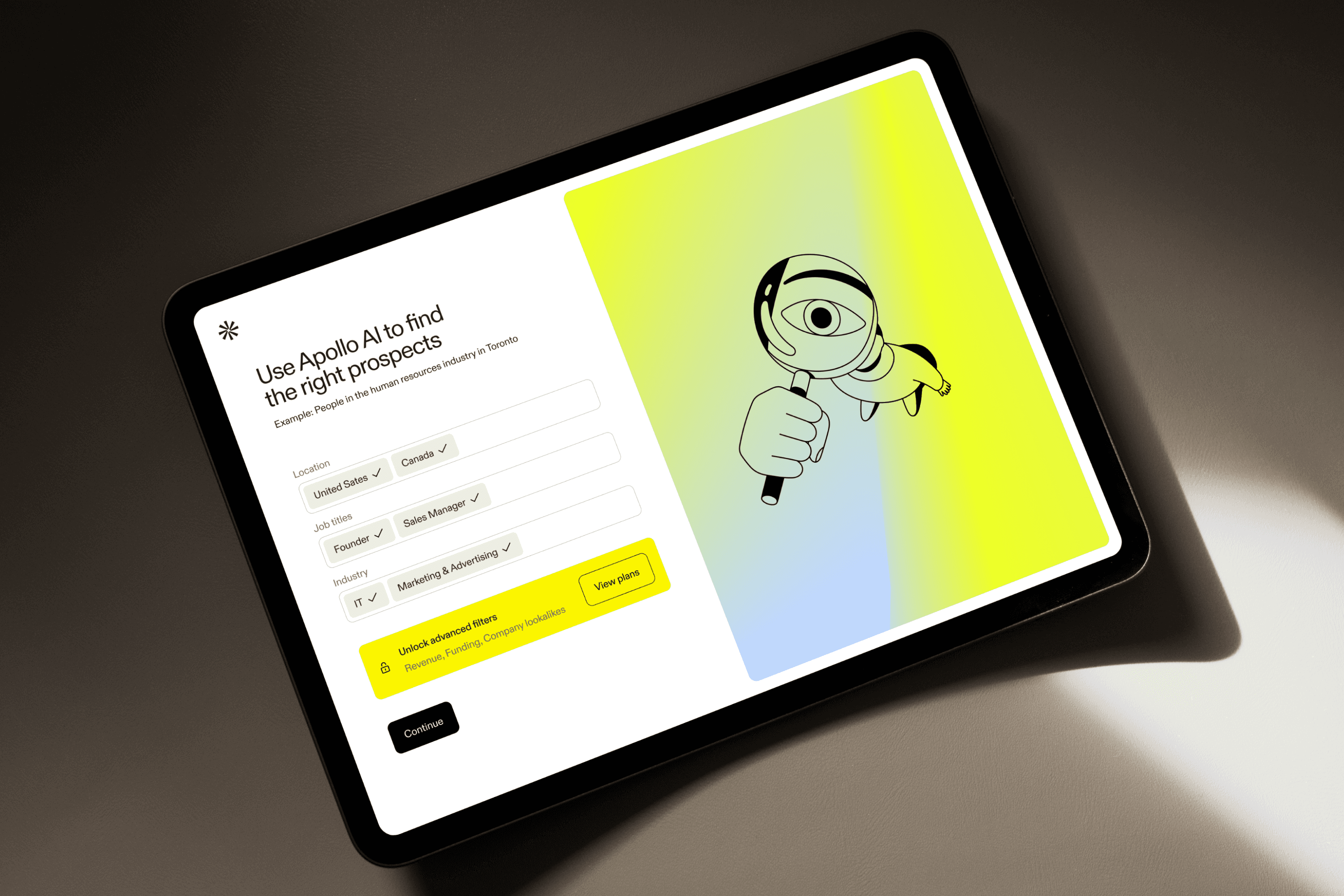
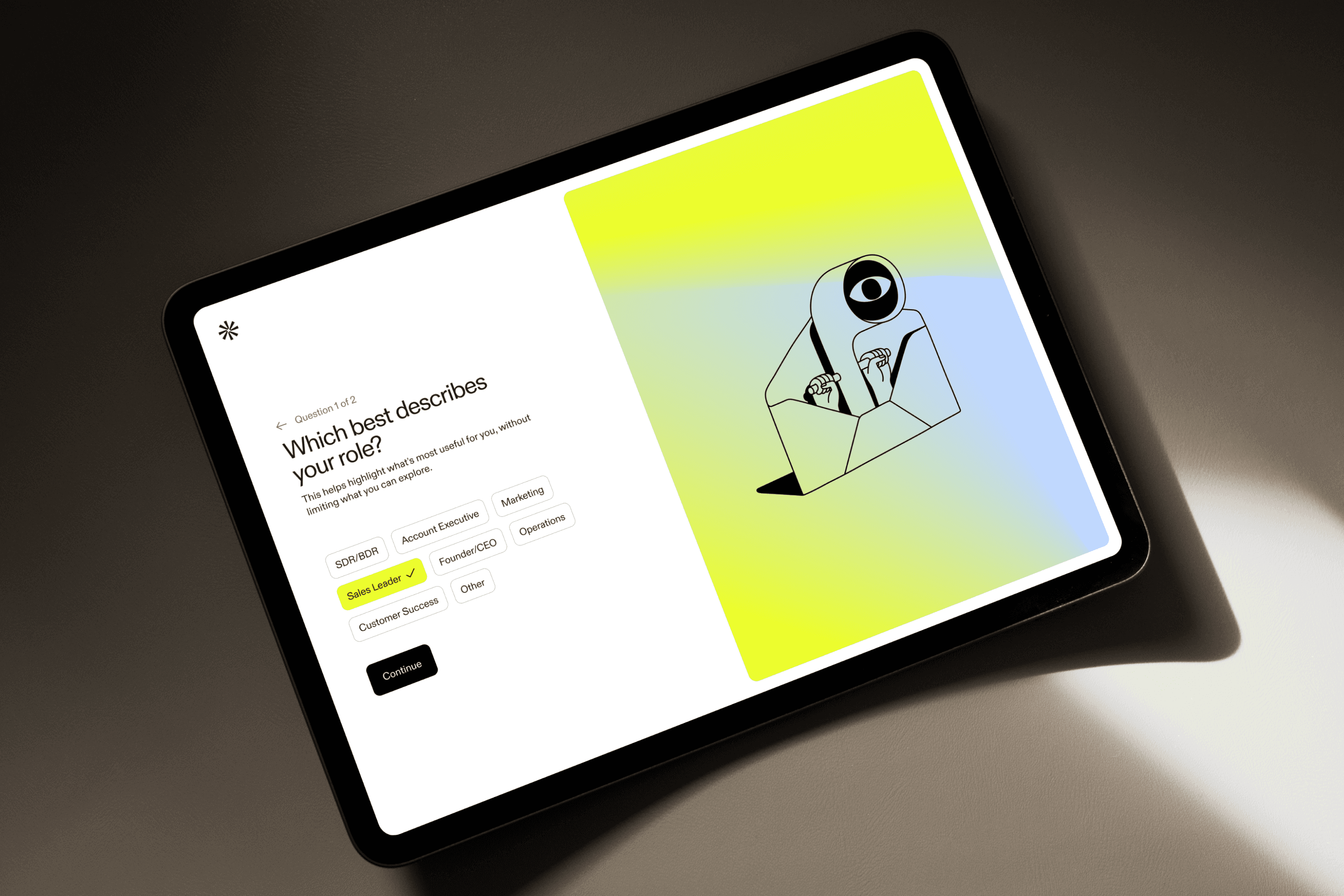
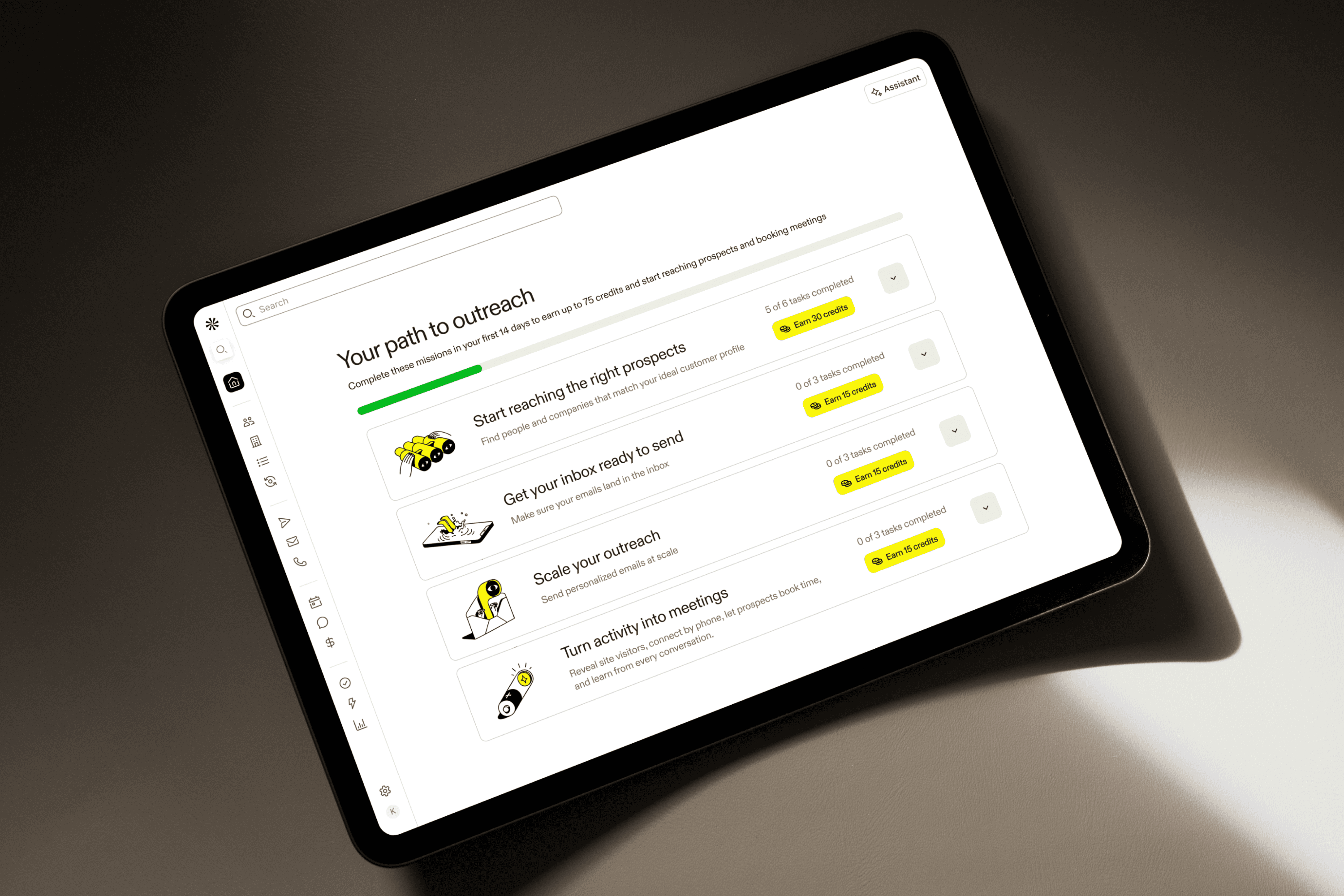
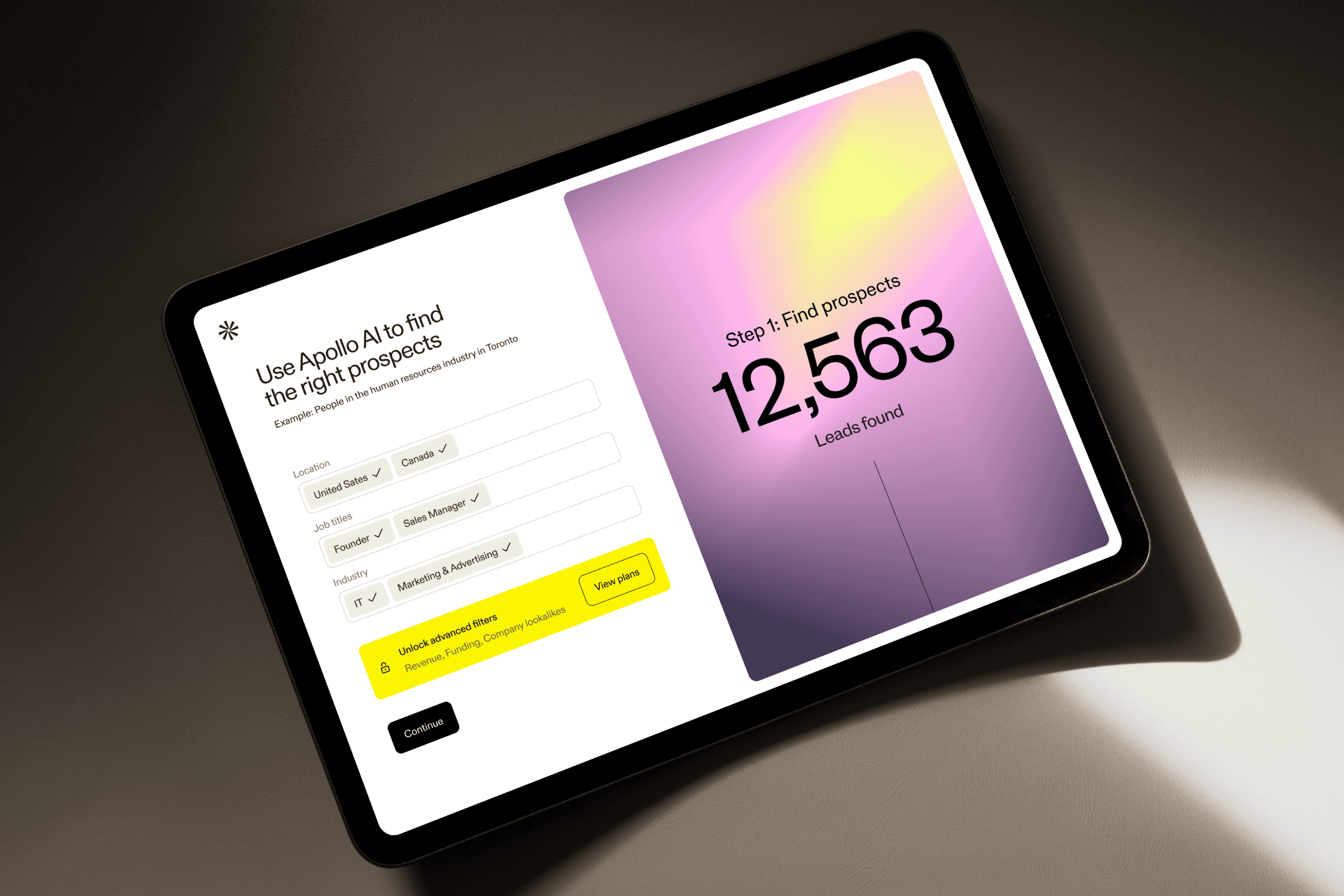
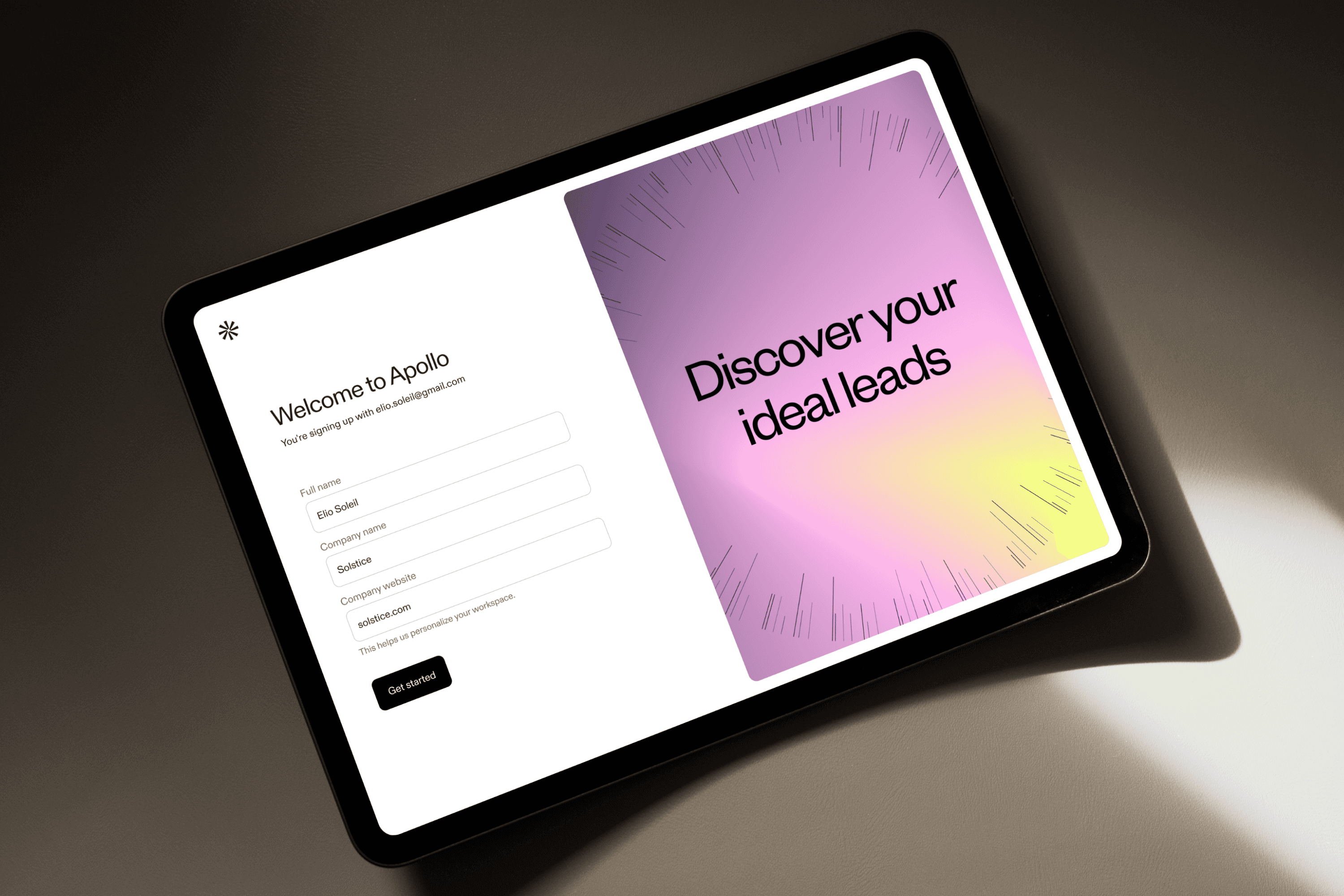
The team needed to test different automated flows quickly, which meant the right side had to be flexible enough to add or remove steps without rebuilding everything. We ended up with photography instead, more generic but more adaptable. The most expressive direction isn't always the right one. Sometimes the system has to win over the idea.
The team needed to test different automated flows quickly, which meant the right side had to be flexible enough to add or remove steps without rebuilding everything. We ended up with photography instead, more generic but more adaptable. The most expressive direction isn't always the right one. Sometimes the system has to win over the idea.
The team needed to test different automated flows quickly, which meant the right side had to be flexible enough to add or remove steps without rebuilding everything. We ended up with photography instead, more generic but more adaptable. The most expressive direction isn't always the right one. Sometimes the system has to win over the idea.
What I'd do differently
What I'd do differently
What I'd do differently
The onboarding work is the honest answer. I went too ambitious too early without checking the idea against the technical constraints first. Getting closer to engineering earlier would have saved time. More broadly the system has to serve the team's speed, not just the creative vision. The best work at Apollo was expressive and adaptable at the same time. That's the balance I'd try to build in from the start next time, not work toward after the fact.
The onboarding work is the honest answer. I went too ambitious too early without checking the idea against the technical constraints first. Getting closer to engineering earlier would have saved time. More broadly the system has to serve the team's speed, not just the creative vision. The best work at Apollo was expressive and adaptable at the same time. That's the balance I'd try to build in from the start next time, not work toward after the fact.
The onboarding work is the honest answer. I went too ambitious too early without checking the idea against the technical constraints first. Getting closer to engineering earlier would have saved time. More broadly the system has to serve the team's speed, not just the creative vision. The best work at Apollo was expressive and adaptable at the same time. That's the balance I'd try to build in from the start next time, not work toward after the fact.
Interested in working together?
© Anton Aheichanka 2026
Interested in working together?
© Anton Aheichanka 2026
Interested in working together?
© Anton Aheichanka 2026